

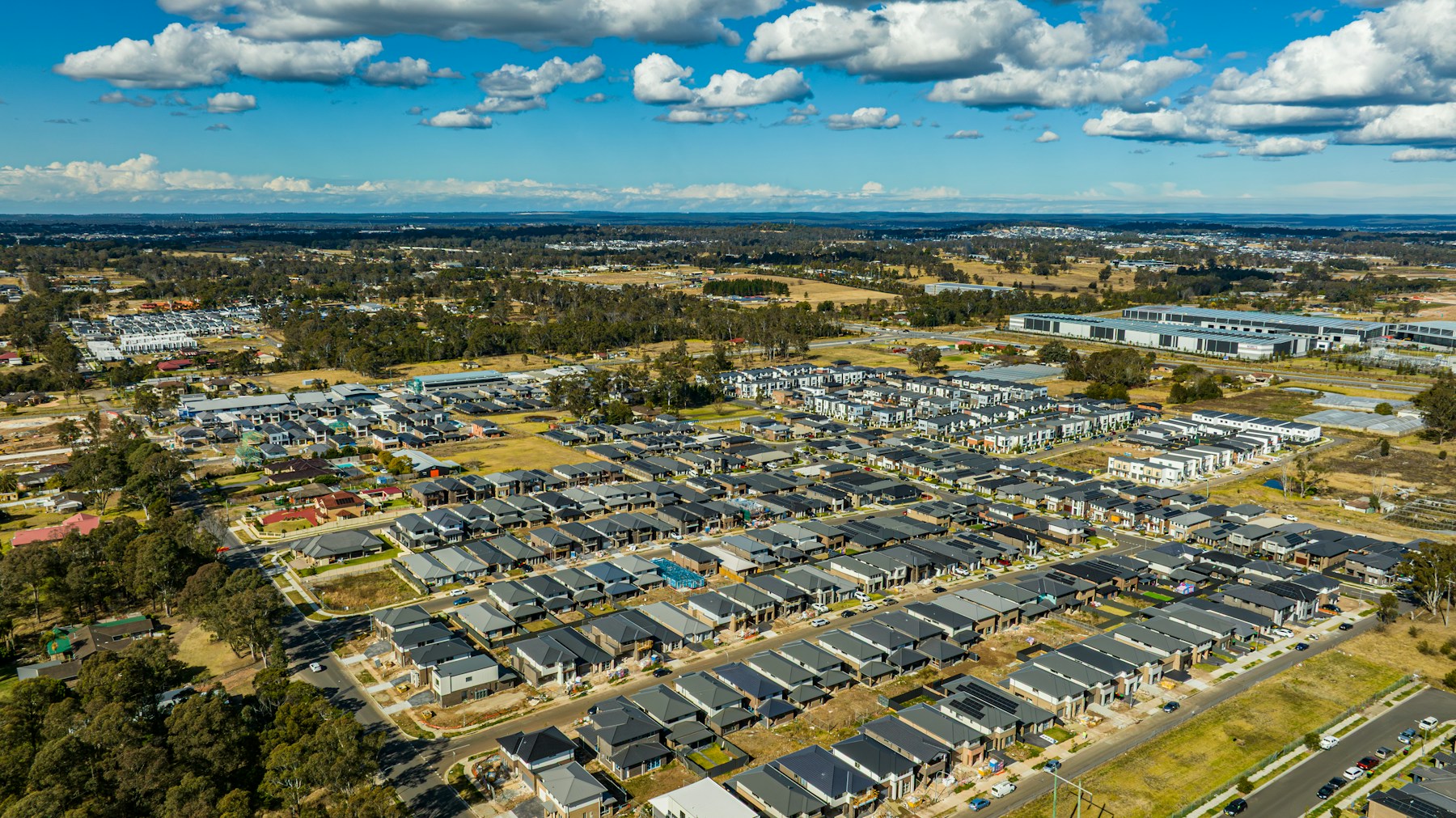
 Sydney housing development. Photo:
 For many Australians, the biggest barrier to property investing is not motivation. It is capital.
Saving a deposit can take years, and borrowing capacity can be limited. That can make joint ventures and other partnership structures worth learning about—but they do not remove the underlying costs or risks.
When people talk about “no money down”, they usually mean that one participant is not contributing the purchase capital personally. Someone still funds the deposit, acquisition costs, consultants, holding costs and works. The non-cash participant must bring genuine value, and every contribution should be documented and independently assessed.
But no money down does not mean no skill, no risk, or no responsibility.
Successful property deals still require strong due diligence, clear feasibility, the right specialists, and a structure that makes sense for everyone involved. For investors, homeowners and aspiring developers, understanding how these deals work is critical before trying to source, structure or present an opportunity.
What Are No Money Down Property Deals?
No money down property deals are property opportunities where an investor or deal finder participates in a project without contributing all of the required capital themselves.
Instead of using their own money for the entire purchase, deposit, development or project cost, they may contribute value through:
- Finding the property opportunity
- Completing early due diligence
- Understanding the development upside
- Coordinating specialists
- Structuring a joint venture
- Managing the project pathway
- Bringing the right parties together
In many cases, another party may contribute the capital while the deal finder contributes the opportunity, strategy, time, education and execution support.
This can occur in a property joint venture, where each party brings something different to the table. The label alone does not determine the legal or tax treatment: the Australian Taxation Office notes that an arrangement described as a joint venture may, depending on its substance, instead have the features of a partnership. Obtain property, legal, tax and finance advice before committing.
Why These Structures Appeal To Australians
Most Australians are taught the retail way to invest in property.
The retail way usually looks like this:
- Save for years for a deposit
- Buy a finished property at market value
- Rent it out
- Wait 10 or more years for capital growth
- Hope the property eventually creates wealth
That strategy can work, but it is slow and often depends heavily on income, borrowing power and market growth.
The wholesale way is different.
A value-creation approach focuses on finding an opportunity before all of its potential has been realised. This may include subdivision potential, small development sites, duplex opportunities or underused land—but only where planning controls, market evidence and a conservative feasibility support the proposal.
The objective is to identify a viable pathway to value. There is no guarantee that approval will be granted, costs will stay within budget or the market will support the projected end value.
How Joint Venture Property Deals Work
A joint venture property deal is an agreement between two or more parties who combine resources to complete a property project.
One party may have capital. Another may have the deal, the time, the education, the network, or the ability to coordinate the opportunity.
A simple example may look like this:
- Person A finds a site with development potential
- Person A completes initial due diligence and feasibility
- Person B provides capital or funding support
- Specialists confirm planning, build costs and approval pathways
- The project is structured through a formal agreement
- Profit is shared based on the agreed contribution and risk
The key is structure.
A joint venture should never be based on a handshake, hype or rough numbers. It needs proper legal advice, clear roles, clear risk allocation, and a realistic feasibility study.
The agreement should address decision-making, capital calls, cost overruns, guarantees, security, insurance, reporting, distributions, default, disputes and exit rights. Each party should obtain independent advice rather than relying on another participant's adviser.
Why Feasibility Matters Before Any Deal Is Presented
Property development feasibility is the process of testing whether a deal is financially viable before committing time, money or risk.
A strong feasibility should consider:
- Purchase price
- Stamp duty and acquisition costs
- Consultant fees
- Council fees and contributions
- Holding costs
- Finance costs
- Construction costs
- Contingency
- Sales values or end valuation
- GST and tax considerations
- Profit margin
Without feasibility, a deal is just an idea.
Disciplined participants test ideas against numbers, evidence and risk-adjusted scenarios—including delays, higher interest rates, cost escalation and lower end values.
This is why Think Property Club teaches students to understand the numbers before they get emotionally attached to a site.
Council, Zoning And Development Controls
Before a site can be considered a strong opportunity, you need to understand what the council may allow.
Key planning controls can include:
- Zoning
- Minimum lot size
- Floor space ratio
- Height limits
- Setbacks
- Parking requirements
- Heritage constraints
- Flood or bushfire overlays
- Easements
- Infrastructure capacity
These controls can completely change the outcome of a project.
A site that looks profitable at first glance may fail once zoning, overlays or council requirements are properly reviewed. On the other hand, a site that looks ordinary may have hidden upside if the planning controls support a better use.
This is why development due diligence is one of the most important skills in property.
The Main Risks In No Money Down Property Deals
No money down property deals can be powerful, but they still carry risk.
Common risks include:
- Overestimating the resale value
- Underestimating construction costs
- Misreading council controls
- Relying on weak assumptions
- Poor joint venture agreements
- Delays in approval
- Funding problems
- Market changes
- Unclear roles between partners
The goal is not to avoid risk completely. That is impossible in property.
The goal is to identify risk early, price it properly, and structure the deal so everyone understands the pathway before moving forward.
ASIC's Moneysmart describes borrowing to invest as a high-risk strategy and warns that loans and interest remain payable even if an investment falls in value. A structure that reduces one participant's upfront cash does not make the project low-risk; it may shift risk to guarantees, obligations, another participant or the project itself.
The 4S Framework For Disciplined Action
At Think Property Club, we teach property through the 4S Framework.
1. System
A repeatable process for finding, assessing and moving through property deals with confidence.
2. Strategies
Joint ventures, subdivisions, duplexes and other value-creation strategies, selected only after site-specific due diligence and conservative feasibility testing.
3. Specialists
The right people around the deal, including planners, builders, finance experts, accountants, solicitors and project specialists.
4. Support
Mentoring, education and community support so students are not trying to work everything out alone.
This framework helps everyday Australians move from confusion to clarity.
Who Are These Strategies Best Suited For?
No money down and joint venture property strategies may suit people who:
- Want to build wealth through property but do not have large capital reserves
- Are willing to learn the numbers properly
- Can follow a proven process
- Want to work with specialists instead of guessing
- Are prepared to do due diligence
- Understand that property is a real business, not a shortcut
They are not suited to people looking for instant results without effort.
The opportunity is real, but the skill must be developed.
Frequently Asked Questions
Can you really do property deals with no money down?
Some property deals can be structured without one participant contributing purchase capital, usually through joint ventures or other commercial arrangements. That is not the same as a cost-free or risk-free deal: capital still comes from somewhere, and the parties may have legal, tax, finance, guarantee and performance obligations.
Is no money down property investing risky?
Yes. Like all property strategies, it carries risk. The risk can be reduced through proper feasibility, council research, specialist advice, legal agreements and conservative numbers.
What is the difference between retail and wholesale property investing?
Retail property investing usually means buying a finished property at market value and waiting for growth. Wholesale property investing focuses on finding and creating value earlier, often through development upside, subdivision potential or structured joint ventures.
Do I need experience to start?
You do not need to be an expert before learning, but you do need education, support and a clear system. Guessing your way through property deals is dangerous.
Final Thoughts
No money down property deals are not about getting something for nothing.
They are about learning how to create value.
When you understand how to find opportunities, assess feasibility, manage risk, work with specialists and structure deals properly, you become more than a buyer. You become a deal maker.
And in property, deal makers are the people who see opportunity before the rest of the market does.
Take the next sensible step: choose one potential site, verify its planning controls with the relevant authority, stress-test a full feasibility and have qualified advisers review both the structure and the numbers before you make any commitment.
Sources and further reading
- ASIC Moneysmart — Borrowing to invest (accessed 30 August 2026)
- Australian Taxation Office — GSTR 2004/2: What is a joint venture for GST purposes? (accessed 30 August 2026)
- Australian Taxation Office — GSTR 2009/2: Partitioning of land (accessed 30 August 2026)
General education only. This article does not provide financial, credit, legal, planning or tax advice. Rules and outcomes depend on the site, jurisdiction, parties and structure.
Keep learning: Explore Stop Waiting For Property To Save You: The Australian Investor's Guide To Creating Value Before The Market Prices It In, Joint Venture Property Deals Australia: How To Structure Property Opportunities Without Doing It All Yourself and Negative Gearing Vs Positive Cashflow Australia: Choosing A Strategy That Fits Your Goals.
Watch The Free Training
Watch the free Think Property Club training and learn how our students are finding, structuring and profiting from property deals the wholesale way.
Watch the free masterclass →Rate this article
Guest rating: select 1 star for poor or 5 stars for great. No account is required.
Leave a comment
Join the discussion. Your email address will not be published.
Frequently asked questions
What Are No Money Down Property Deals?
No money down property deals are property opportunities where an investor or deal finder participates in a project without contributing all of the required capital themselves.
Why No Money Down Strategies Appeal To Everyday Australians?
Most Australians are taught the retail way to invest in property.
How Joint Venture Property Deals Work?
A joint venture property deal is an agreement between two or more parties who combine resources to complete a property project.
Why Feasibility Matters Before Any Deal Is Presented?
Property development feasibility is the process of testing whether a deal is financially viable before committing time, money or risk.
What should investors know about council, zoning and development controls?
Before a site can be considered a strong opportunity, you need to understand what the council may allow.
Loading comments…